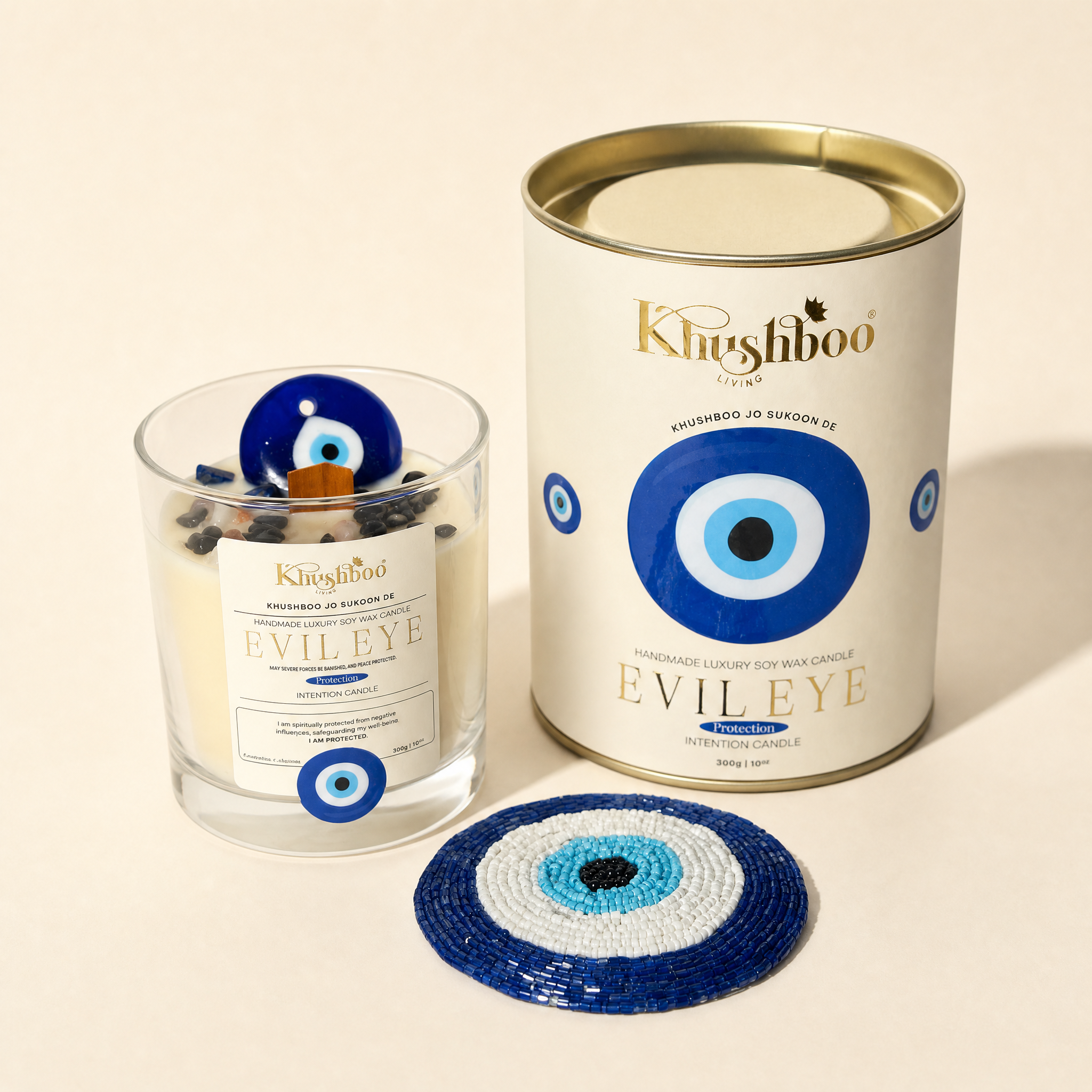
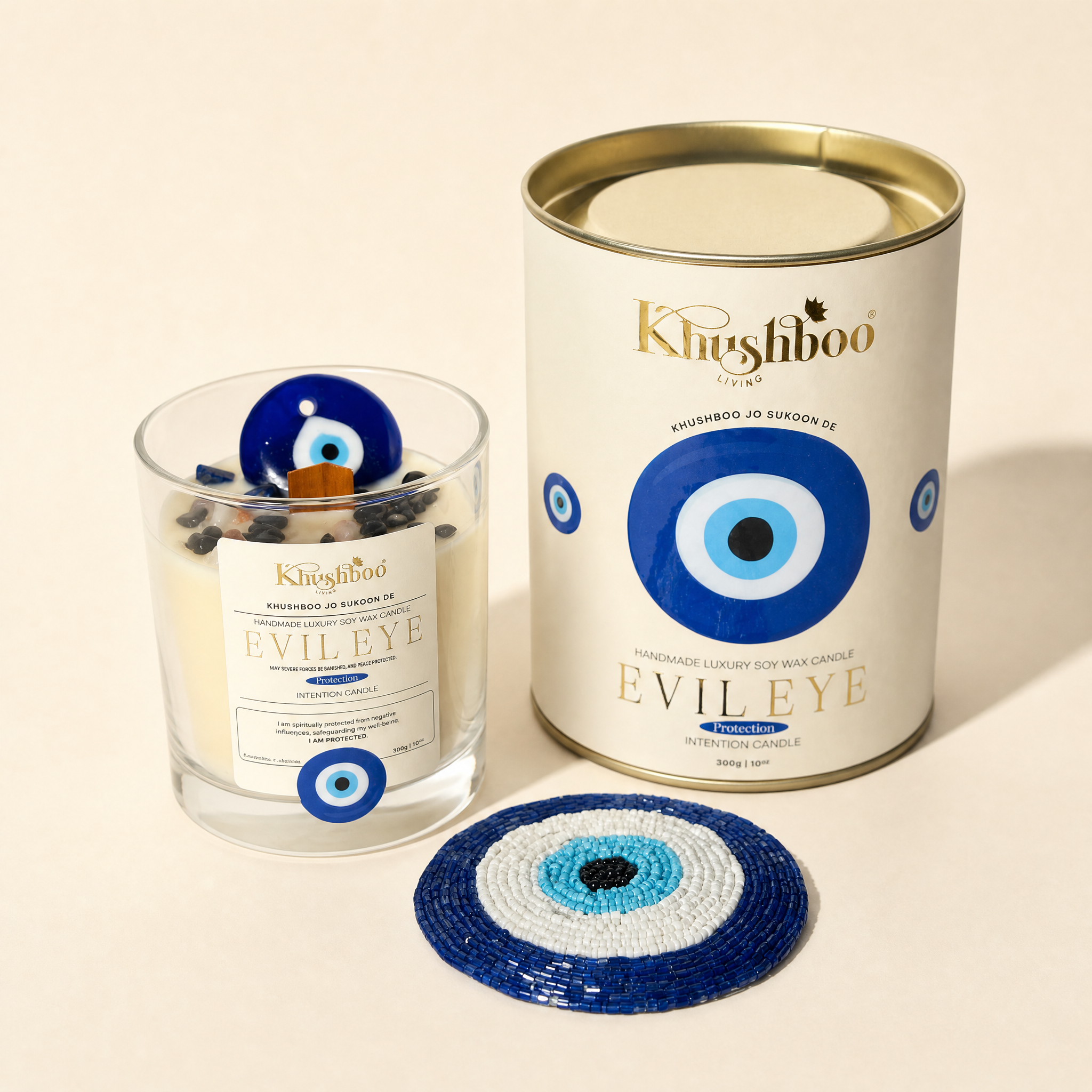
Short answer: The evil eye (nazar) is a protective symbol believed to ward off envy and negative energy directed at you, consciously or not. It shows up as jewelry, wall art, and — increasingly — home fragrance, because lighting a protective symbol in your space feels a lot more intentional than just buying a candle.
Where does the evil eye symbol come from?
The evil eye belief spans Mediterranean, Middle Eastern, and South Asian cultures for thousands of years. In India, it's called nazar — the idea that an admiring or envious glance can unintentionally carry negative energy onto a person, home, or new success. The blue-eye talisman (and rituals like burning lemon-chili or camphor) exist to reflect that energy back before it settles.
Why is it having a moment right now?
-
Aesthetic appeal: The blue-and-white palette is instantly recognizable and photographs beautifully — perfect for shelfies and gifting content.
-
The manifestation wave: Gen Z and millennials have merged wellness culture with traditional symbolism — protection, intention-setting, and self-care in one object.
-
It's a conversation starter: Unlike a plain candle, an evil eye piece invites the question "wait, what does that mean?" — which is exactly what makes it shareable.
How to use an evil eye candle
-
Set an intention before lighting — protection, clearing a space, or starting fresh in a new home.
-
Light it near your entryway or workspace — high-traffic, high-energy spots benefit most.
-
Let it burn with purpose, not just as background scent — this is a small ritual, not just décor.
Our Evil Eye Scented Candle with Real Gemstones & Glass Charm comes in three intentions — Blue for protection, Pink for love, and White for manifestation — so you can pick based on what you actually need right now.
Is the evil eye a religious symbol?
No — it predates and crosses most major religions. It's a cultural and folk belief, not tied to one faith, which is part of why it resonates with such a wide audience today.
FAQ
Does an evil eye candle actually protect you?
It's a belief and ritual object, not a scientifically proven protection. Many people find real value in the intention-setting and mindfulness the ritual creates, regardless of the folklore behind it.
What's the difference between blue, pink, and white evil eye candles?
Blue traditionally symbolizes protection, pink represents love and relationships, and white is associated with manifestation and clarity — pick based on the energy you want to bring into a space.
Can I gift an evil eye candle?
Yes — it's one of the most popular housewarming, new-job, and "thinking of you" gifts because it doubles as décor and carries genuine meaning.