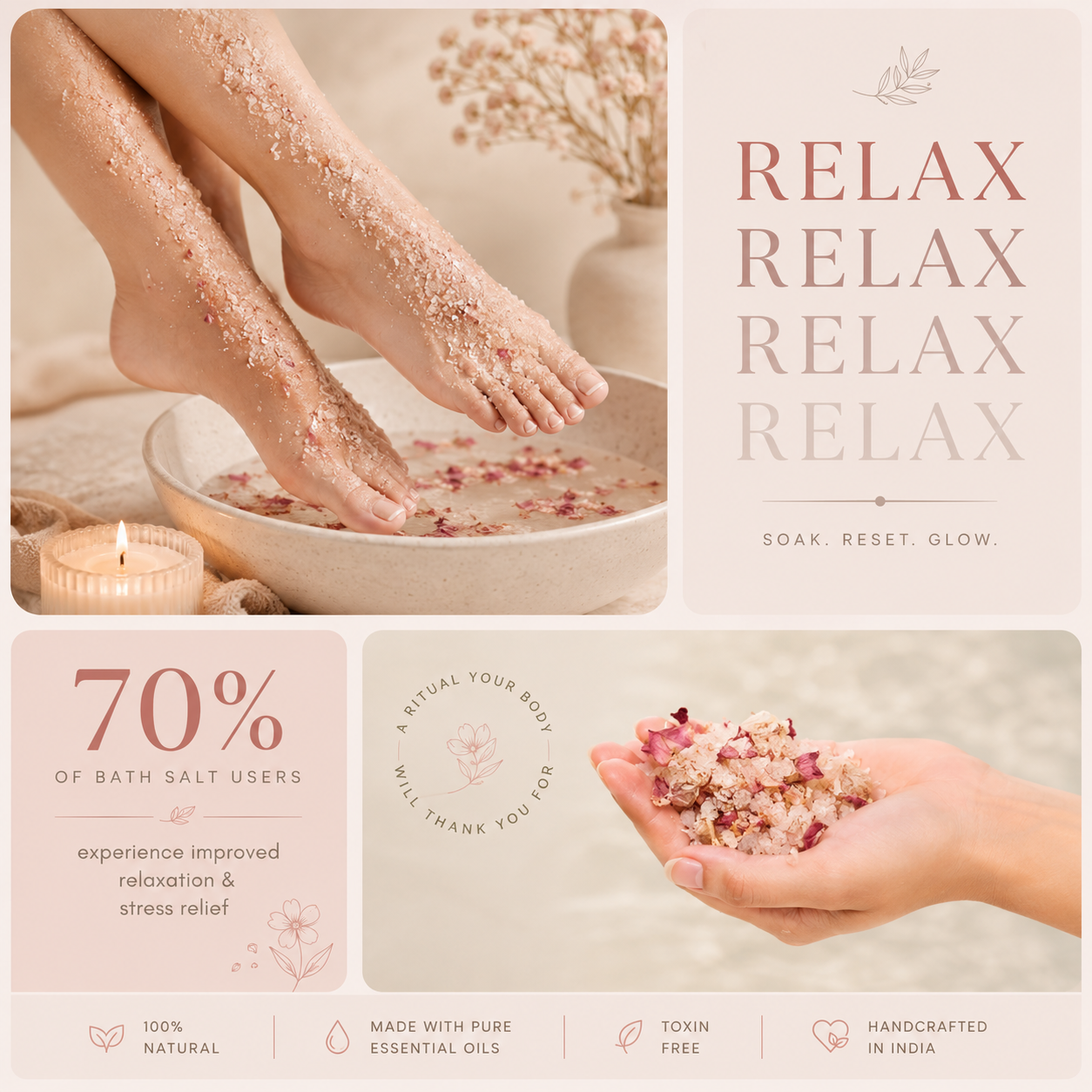
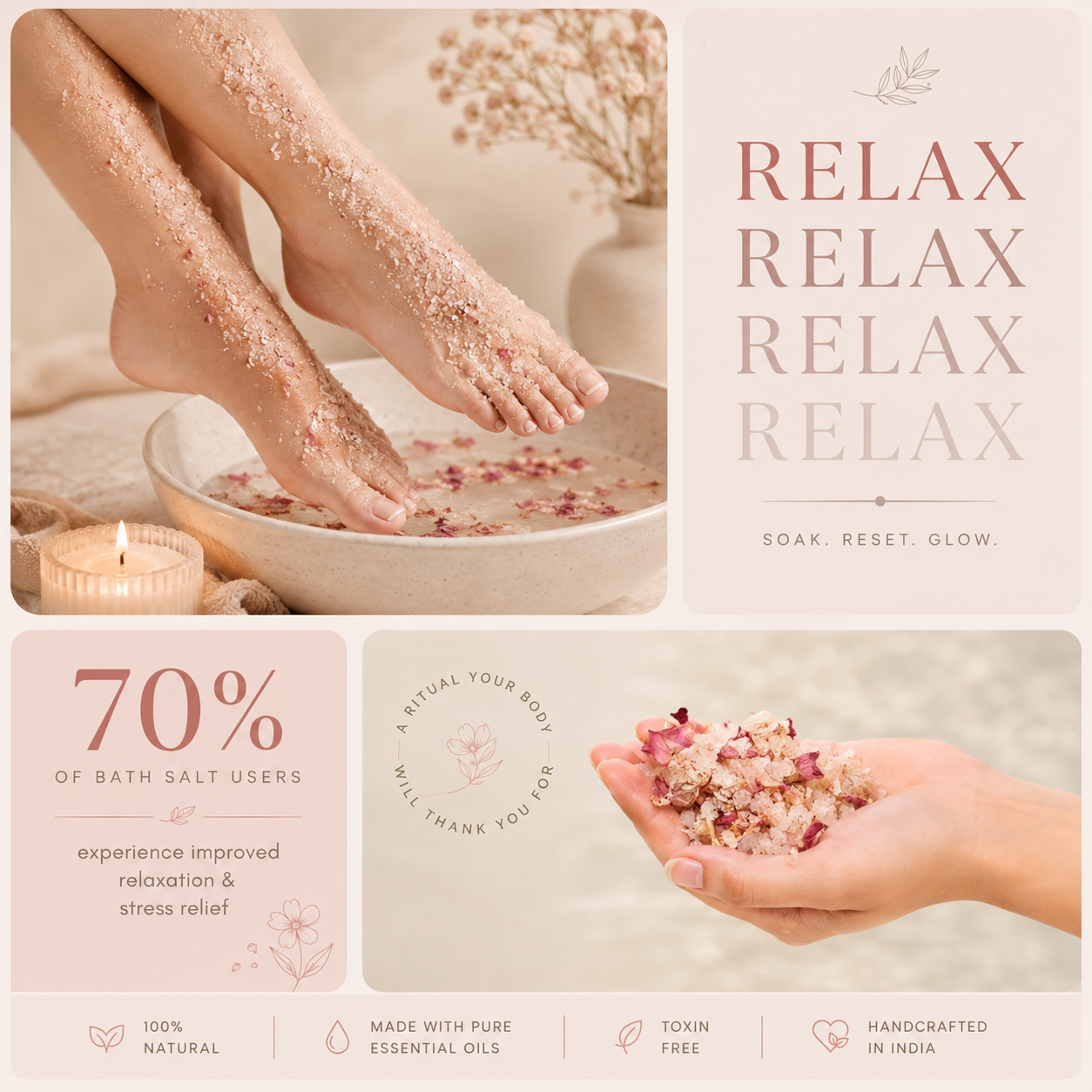
Quick answer: a warm magnesium bath salt soak after a workout is one of the most accessible recovery tools available — it combines heat therapy (which improves blood flow to tired muscles) with magnesium sulphate, commonly used to help ease post-exercise muscle tension.
Why post-workout soreness happens
That familiar sore, tight feeling a day or two after an intense workout — often called DOMS (delayed onset muscle soreness) — happens as muscles repair from the micro-stress of exercise. It's a normal part of training, but it's also genuinely uncomfortable, especially after leg day or a new routine.
Why a bath salt soak fits into a recovery routine
-
Warm water improves circulation, which is part of what makes a hot soak or bath feel immediately better after training.
-
Epsom salt (magnesium sulphate) is one of the most commonly used at-home recovery aids by athletes and regular gym-goers alike.
-
It's a low-effort recovery step — unlike foam rolling or stretching, a soak requires zero technique, which makes it more likely you'll actually do it consistently.
-
It doubles as a wind-down ritual, which matters since sleep quality is itself a major factor in how well muscles actually recover.

How to build it into your routine
-
Soak within a few hours of training, or the next evening if soreness peaks later.
-
Use warm, not scalding, water — add 2–4 scoops of Magnesium Bath Salt.
-
Soak for 20–30 minutes, ideally after your last meal of the evening so you can head straight to bed after.
-
Stay hydrated — warm soaks cause you to lose fluid through sweat, so drink water before and after.
Who this is for
- Gym-goers and weightlifters dealing with regular post-training soreness
- Runners and endurance athletes recovering from long sessions
- Anyone starting a new workout routine and feeling it more than usual
FAQ
Should I take a bath salt soak before or after a workout?
After — it's most useful as a recovery step once your session is done, rather than as a warm-up.
How soon after a workout should I soak?
Within a few hours of training works well, though soaking the next day when soreness peaks is also effective.
Can a bath salt soak replace stretching or foam rolling?
No — it's a complementary recovery tool, not a replacement for proper warm-up, stretching, or mobility work.