Quick answer: common signs people associate with low magnesium include muscle cramps, fatigue, trouble sleeping, and tension headaches. A blood test from a doctor is the only reliable way to confirm an actual deficiency — but many people also use a warm magnesium bath salt soak as a relaxing addition to their routine.
Signs commonly associated with low magnesium
-
Muscle cramps or twitches, especially in the legs or feet
-
Fatigue or low energy that doesn't fully resolve with rest
- Trouble falling or staying asleep
- Tension-type headaches
- Irritability or difficulty concentrating
Important: these signs can overlap with many other causes — dehydration, stress, poor sleep, or unrelated health conditions. If you suspect an actual deficiency, the right first step is a blood test and a conversation with your doctor, not self-diagnosis.
Where does magnesium intake actually come from?
Magnesium is primarily obtained through diet — leafy greens, nuts, seeds, whole grains, and legumes are common dietary sources. Many people simply don't get enough through food alone, especially with processed-food-heavy diets, which is part of why magnesium is one of the more commonly discussed mineral gaps.

Where a magnesium bath salt soak fits in
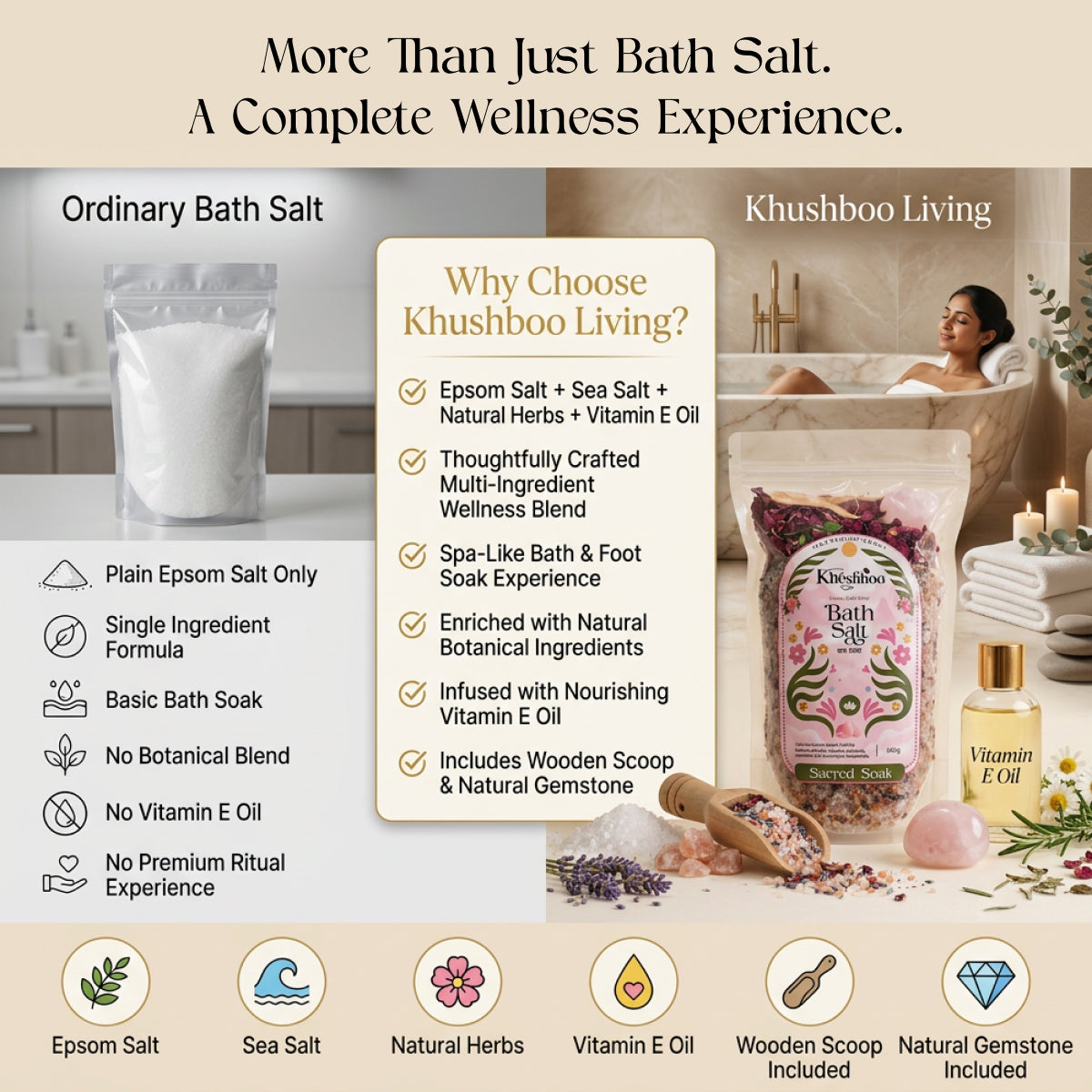
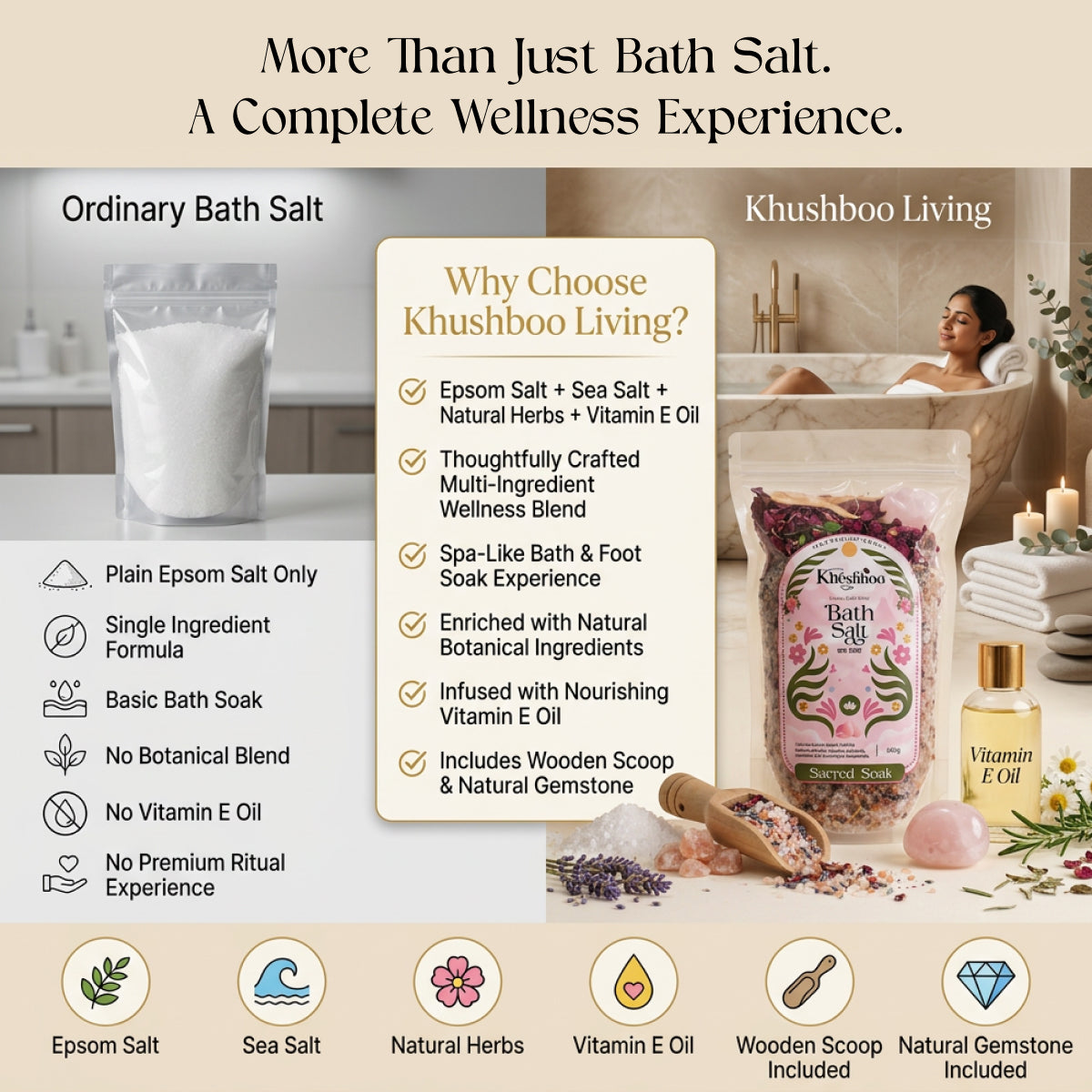
A warm bath with Epsom salt (magnesium sulphate) is a long-standing at-home relaxation ritual. Whether meaningful magnesium is absorbed through skin during a soak is debated among researchers, so we don't position our Magnesium Bath Salt as a treatment for deficiency. What it reliably offers is warmth, muscle relaxation, and a genuine wind-down ritual — which can meaningfully help with stress and sleep quality regardless of your magnesium levels.
What actually helps if you suspect low magnesium
-
Get a blood test through your doctor — this is the only reliable way to confirm a true deficiency.
-
Look at your diet — leafy greens, nuts, seeds, and whole grains are good dietary sources.
-
Follow your doctor's guidance on any supplementation, since too much magnesium from supplements can also cause issues.
-
Use a warm soak as a relaxation ritual alongside — not instead of — medical advice, if muscle tension or sleep is part of what you're dealing with.
FAQ
Can a bath salt soak fix magnesium deficiency?
No — a bath salt soak is a relaxation ritual, not a medical treatment. If you suspect a deficiency, see a doctor and consider a blood test.
What foods are good sources of magnesium?
Leafy greens, nuts, seeds, whole grains, and legumes are commonly cited dietary sources of magnesium.
Is Epsom salt absorbed through the skin during a bath?
This is debated in research — some studies suggest limited transdermal absorption, while others find no significant effect. The relaxation and warmth benefits of a soak are well established regardless.